

By Loni, owner of ProLine Roofing. GAF Master Elite® contractor, licensed and insured.
Published · Updated
The short answer
For most flat roofs on Staten Island homes, the choice is TPO or EPDM. TPO is white with heat-welded seams and keeps rooms cooler; EPDM is black rubber, flexible and easy to repair. Both typically last 20 to 30 years. Modified bitumen is common on older roofs, and coatings extend sound ones. See flat roofing for how we decide.
Key takeaways
- TPO and EPDM both typically last 20 to 30 years; modified bitumen 15 to 20; a coating 10 to 15 years per coat.
- TPO's heat-welded seams suit roofs with many pipes and curbs; its white surface reflects summer heat.
- EPDM rubber stays flexible in the cold and is simple to patch; its glued seams are where it needs watching.
- A coating is not a new roof: it only works over a dry, sound, well-attached roof.
- Drainage and flashing decide how long a flat roof lasts more than the membrane does.
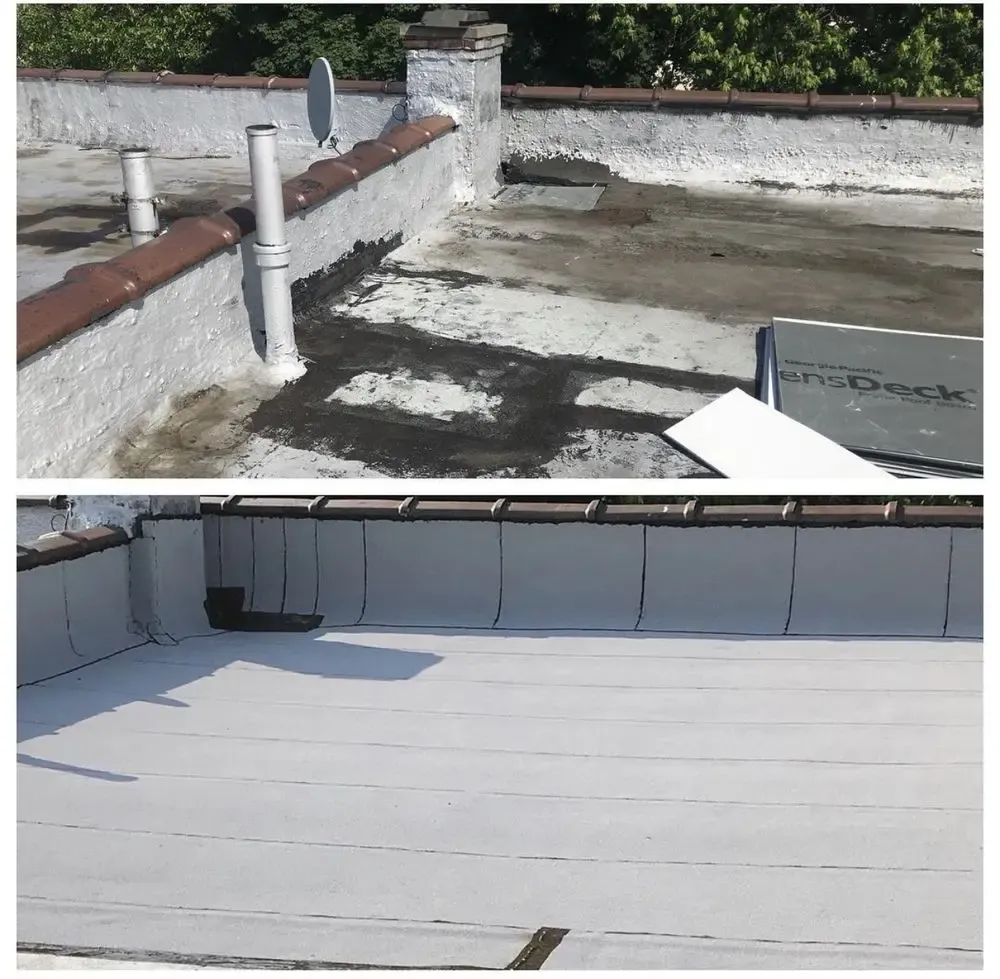
What is a flat roof made of?
A “flat” roof is not quite flat: it is built with a slight slope so water runs to the drains. Whatever membrane you choose sits on top of the same layers, and most problems start where those layers meet a wall or a drain.
- Roof deck. Boards or plywood on the joists. Wet or rotted deck is replaced before anything goes on top.
- Tapered insulation. Boards cut with a built-in slope, so water runs to the drains instead of pooling.
- Cover board. A thin, hard board over the insulation that the membrane is attached to.
- Membrane. The waterproof layer: white TPO with heat-welded seams, or black EPDM rubber.
- Wall flashing. The membrane turned up the parapet wall. Most flat-roof leaks start at these edges.
- Coping. Metal cap over the top of the parapet that keeps water out of the wall.
- Drain. At the low point, clamped to the membrane. Blocked drains are the main cause of ponding.
- Parapet wall. The low wall around the roof edge on many attached houses and row houses.
TPO vs EPDM vs modified bitumen vs coatings
| Feature | TPO | EPDM | Modified bitumen | Coating |
|---|---|---|---|---|
| What it is | White single-ply membrane | Black synthetic rubber | Asphalt-based rolled roofing | Liquid layer over an existing roof |
| Seams | Heat-welded | Glued or taped | Torched or adhered | Seamless |
| Typical life | 20–30 years | 20–30 years | 15–20 years | 10–15 years per coat |
| Summer heat | Reflects it | Absorbs it | Absorbs it (unless capped white) | Reflects it (white coatings) |
| Repairs | Weld a patch | Glue or tape a patch | Torch or adhere a patch | Recoat |
| Suits | Many seams and penetrations, hot top floors | Simple roofs, easy repairs | Matching existing roofs | Sound roofs that need more years |
Which flat roof material should you choose?
-
Choose TPO if
- The roof has many pipes, vents, curbs or a skylight to seal around
- The room under it gets hot in summer
- You want welded seams that act as one sheet
-
Choose EPDM if
- The roof is a simple shape with few penetrations
- Easy, low-cost patching matters to you
- The roof sees foot traffic or movement
-
Choose a coating if
- The existing roof is dry, sound and well attached
- It needs more years, not a new system
- You want a reflective surface without a tear-off
-
Choose a full replacement if
- The roof is wet underneath or the deck is soft
- There are already two layers
- Seams and flashing have failed in several places
TPO: welded seams, white surface
TPO’s welded seams are its strength: overlapping sheets are fused with hot air into one continuous membrane, which matters on roofs with many seams, pipes and curbs. Its white surface reflects much of the summer sun, which keeps top-floor rooms cooler; the US EPA describes how reflective “cool roofs” lower roof temperatures. More on TPO roofing.
EPDM: flexible rubber, easy to patch
EPDM rubber has been used on flat roofs for decades. It stays flexible in cold weather, tolerates movement and is simple to patch. Its seams are glued or taped rather than welded, so seams and edges are where it needs watching. Being black, it absorbs heat in summer. More on EPDM rubber roofing.
Modified bitumen: the older standard
Many older flat roofs on the island are modified bitumen: asphalt-based rolls, often with a granule surface, torched or adhered in overlapping layers. It is tough but ages in the sun, cracks at the seams and is usually replaced with TPO or EPDM when it wears out.
Coatings: more years for a sound roof
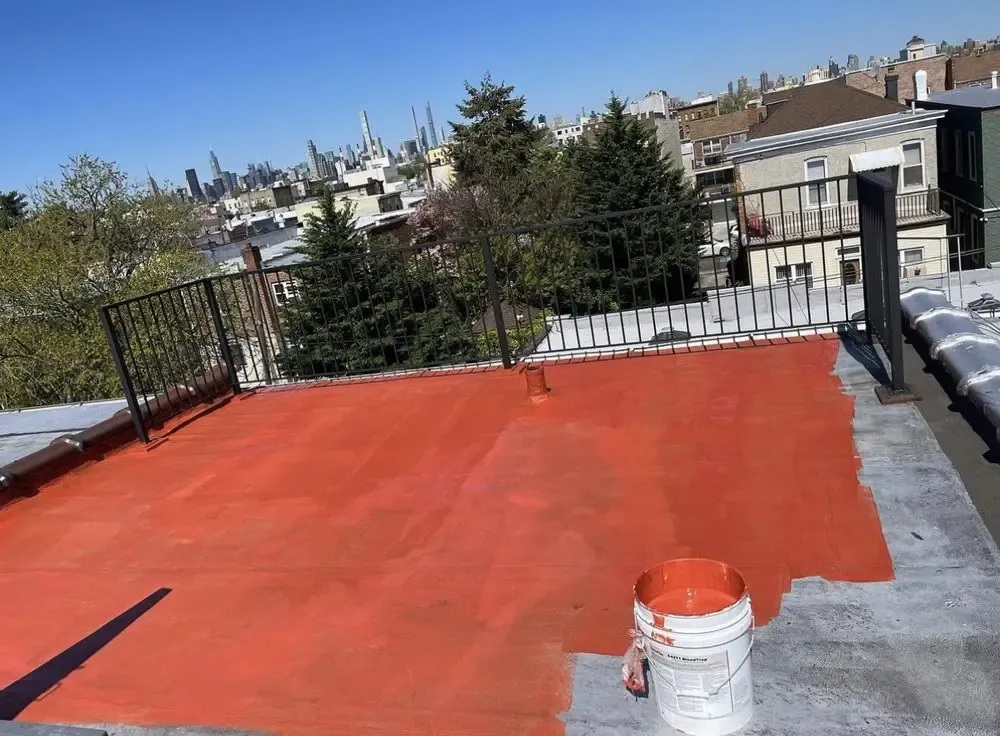
A coating is not a new roof. It seals and protects a sound existing roof, adds years and, if white, reflects heat. It is the right choice only when the roof underneath is dry and well attached; over a wet roof it traps the water in. More on flat roof coatings.
What matters more than the material?
Drainage. Every flat-roof material wears out fast under standing water. A common rule of thumb: water still on the roof two days after the rain stops is ponding. Before choosing a membrane, make sure the roof drains: drains at the low points, clear and big enough, and slope built in with tapered insulation where needed.
Flashing. The second thing that decides how long any flat roof lasts is the flashing at parapet walls, drains, hatches and pipes. Most flat-roof leaks start at an edge, not in the middle of the membrane.
How long does a flat roof replacement take?
Most flat roof replacements take 3 to 5 days, depending on the size, the number of old layers to remove, the drainage work and access. Flat roofs are priced by the job after a free inspection; see flat roofing for how we inspect and what the written estimate covers.
Sources and further reading
- US EPA, Using Cool Roofs to Reduce Heat Islands
- Berkeley Lab Heat Island Group, Cool Roofs
- InterNACHI, Standard Estimated Life Expectancy Chart for Homes
Prices are our published Staten Island ranges. Everything else comes from our own inspections and installs unless a source is listed.