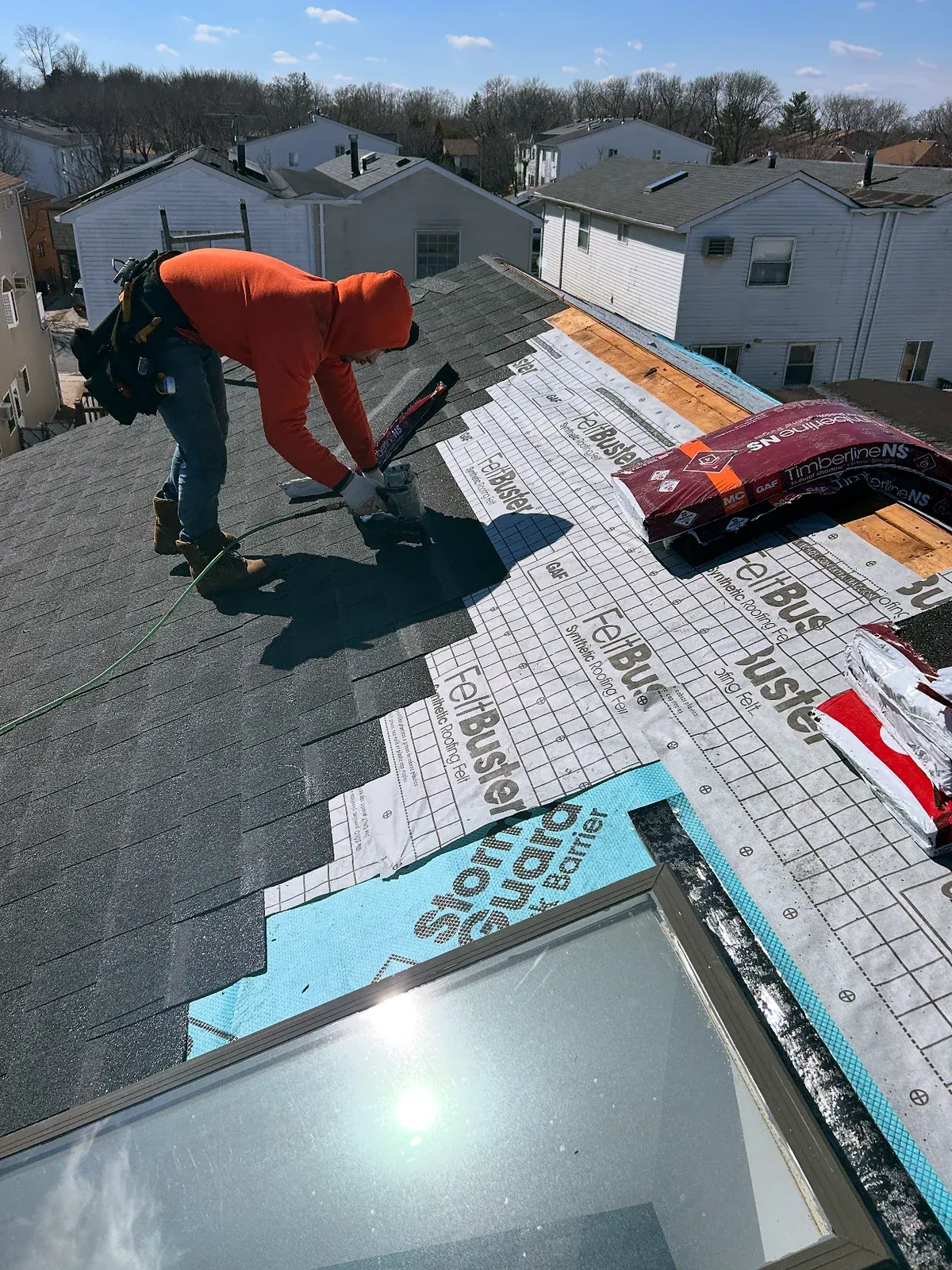
Skylights on Staten Island houses
Skylights bring daylight into attic bedrooms, top-floor bathrooms, kitchens and stairwells, and plenty of houses on the island have one or two. Most were installed with the roof, which means many are now as old as the roof around them, with seals and flashing near the end of their life. They are also among the most common places for a roof to leak, because a skylight is a hole in the roof that depends entirely on its flashing and seals to stay dry.
Repair
Most skylight problems are leaks, and most leaks are at the flashing, the metal skirt that sheds water around the unit, rather than through the glass. Older skylights were often tarred instead of flashed, and tar cracks within a few seasons. A proper repair replaces the flashing and the shingles around it so water flows around the skylight, and renews dried-out seals. Details are on skylight repair.
Replacement
When the glass fogs between the panes, the dome cracks or yellows, the frame rots, or the leak keeps coming back, the unit itself has reached the end. Replacing it means removing the old skylight, checking the curb or opening for rot, setting the new unit and installing new flashing. If your roof is due too, doing both together is simpler and cheaper. Details are on skylight replacement.
New skylights
A new skylight means cutting an opening in the roof between the rafters, framing it, setting and flashing the unit, and finishing the shaft inside. Where it goes depends on the rafters, the room below and which way the roof faces. Details are on skylight installation.
Types of skylights
- Deck-mounted: the unit sits directly on the roof deck with its own flashing kit. Common on pitched shingle roofs.
- Curb-mounted: the unit sits on a raised wooden frame, the curb, which is flashed into the roof. Common on older houses and on flat or low-slope roofs.
- Fixed or venting: fixed skylights only let light in; venting skylights open to let warm, damp air out of bathrooms and kitchens.
- Glass or acrylic dome: older bubble skylights have plastic domes that yellow and crack with age; most replacements today are flat insulated glass.
The flashing makes or breaks a skylight
On every skylight job, new or old, the flashing is what decides whether it stays dry. Each piece has to overlap the one below so water is always shed outward and down the roof, with shingles lapped correctly over and under it. That is why we do not reuse old flashing or seal a skylight with tar, and why we check the roof around it, not just the unit. For other leaks around chimneys, vents and walls, see roof repair. If your skylight drips from condensation rather than rain, a damp attic or room may be the cause; see attic ventilation.