

By Loni, owner of ProLine Roofing. GAF Master Elite® contractor, licensed and insured.
Published · Updated
The short answer
In New York weather, an architectural asphalt shingle roof typically lasts 20 to 30 years, a 3-tab shingle roof 15 to 20, a metal roof 40 years or more, and a TPO or EPDM flat roof 20 to 30. Ventilation, installation and exposure to wind and trees decide where a roof lands in that range. When it is near the end, see roof replacement.
Key takeaways
- Architectural shingles, the most common roof on Staten Island, typically last 20 to 30 years; older 3-tab shingles 15 to 20.
- Flat roofs in TPO or EPDM typically last 20 to 30 years, modified bitumen 15 to 20, and a coating 10 to 15 years per coat.
- Attic ventilation and installation decide more about a roof's life than the brand of shingle.
- A 50-year manufacturer warranty is not a 50-year roof: it covers material defects, not wear from sun, wind and trees.
- Most roofs show the same stages: first curling on the sunny slope around year 15, granule loss after 20, returning leaks near the end.
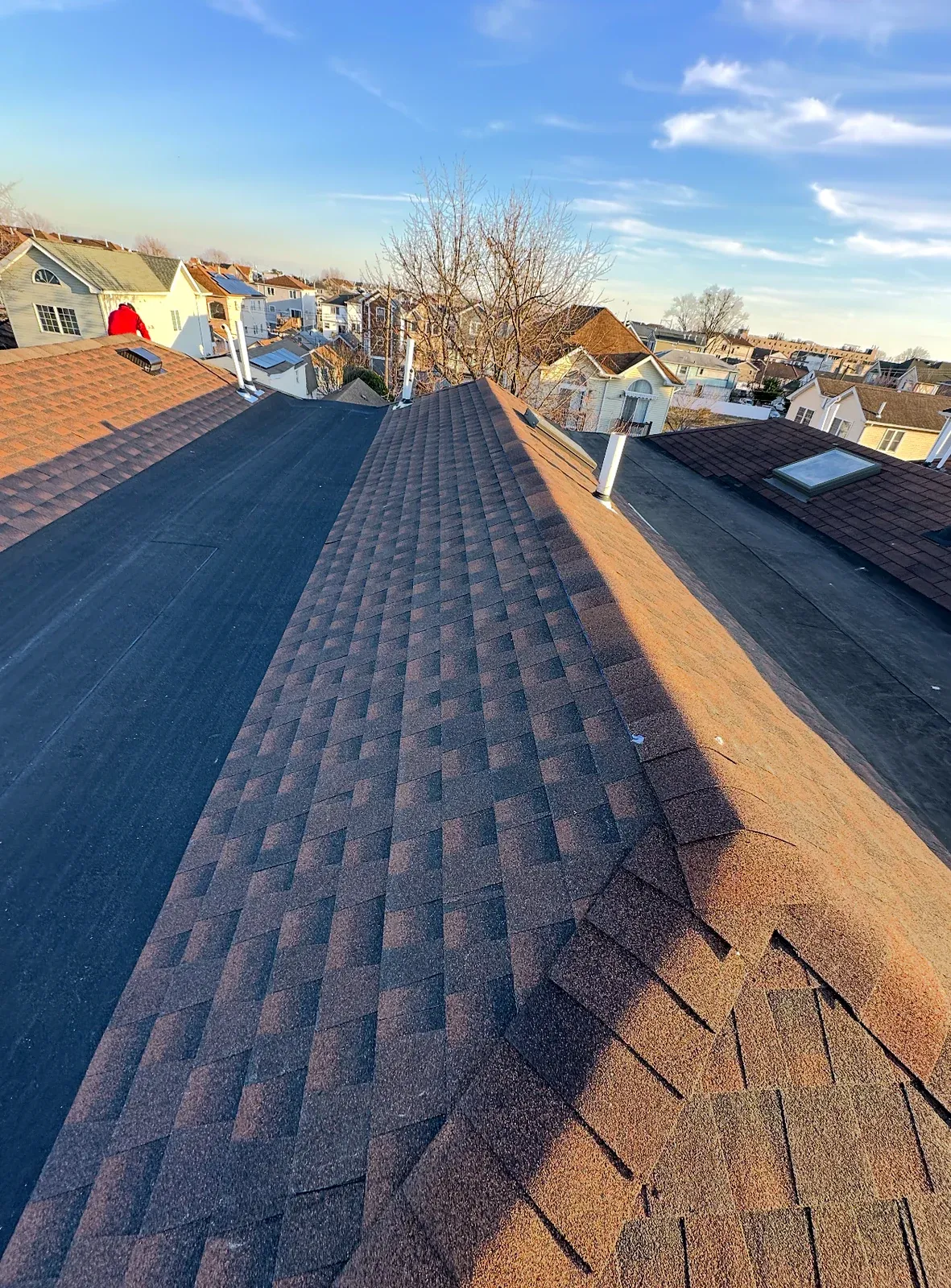
How long does each type of roof last?
The type of roof sets the range. Where your roof lands inside that range depends on how it was installed and what it lives through. These are the typical lifespans we see in New York weather, and they match the ranges published by home inspectors’ associations.
| Roof type | Typical life in New York | What wears it out |
|---|---|---|
| Architectural asphalt shingles | 20–30 years | Sun on the south side, wind, poor attic ventilation |
| 3-tab asphalt shingles | 15–20 years | Wind, thinner material |
| Metal (standing seam) | 40+ years | Fasteners and flashing more than the panels |
| TPO flat roof | 20–30 years | Ponding water, seams at walls and drains |
| EPDM flat roof | 20–30 years | Seams, shrinkage at edges, punctures |
| Modified bitumen flat roof | 15–20 years | Sun, cracking, failed seams |
| Flat roof coating | 10–15 years per coat | Thickness applied; can be recoated |
These are typical ranges, not guarantees. Two identical roofs on the same street can last ten years apart.
Architectural shingles: 20 to 30 years
Architectural (or dimensional) shingles are thick, layered asphalt shingles and the standard on Staten Island houses today. Their weight and stronger seal strip help them ride out wind better than older shingles. They wear from the top down: the sun breaks down the asphalt, the protective granules wash off, and the shingles dry, curl and crack.
3-tab shingles: 15 to 20 years
The flat, single-layer shingles on many roofs put on before the 2000s. They are thinner and lighter, so they lift and tear in wind sooner. If your roof has 3-tab shingles, it is probably one of the older roofs on the street.
Metal roofs: 40 years or more
Standing-seam metal panels last a long time; on a metal roof it is usually the fasteners, sealant and flashing that need attention first.
Flat roofs: 10 to 30 years, depending on the membrane
Flat roofs over rear extensions, garages and attached houses are TPO, EPDM, modified bitumen or a coating. Water that sits on a flat roof shortens any of them. Our guide comparing flat roof materials goes through each one.
The life of a shingle roof, stage by stage
A shingle roof does not fail all at once. It goes through stages, and knowing which one yours is in tells you whether to repair, watch or plan.
What shortens a roof’s life on Staten Island?
The same six things show up again and again when we inspect a roof that has failed early.
- Sun. UV and heat break down the asphalt. The south and west slopes age first.
- Wind. Lifts shingles and breaks their seals, worst on exposed streets near the water.
- Trees. Branches scrape the roof, shade keeps it damp and leaves fill the gutters.
- Clogged gutters. Water backs up under the roof edge and rots the deck at the eaves.
- Attic ventilation. A hot, damp attic cooks the shingles from below and rots the deck.
- Flashing. Old or tarred-over flashing at chimneys and walls is where most leaks start.
- Attic ventilation. A hot, damp attic cooks shingles from below and rots the deck. Poor ventilation is one of the most common reasons a roof fails early, and it is invisible from the street.
- Wind. Exposed streets, especially along the South Shore and near the water, see shingles lifted and their seals broken in storms.
- Trees. Overhanging branches scrape the roof, drop debris that holds moisture, fill gutters and keep slopes shaded and damp. Mid-Island streets with tall trees see this most.
- Gutters. Clogged gutters back water under the roof edge and rot the deck at the eaves.
- Installation. Too few nails, nails in the wrong place, missing ice and water barrier, reused flashing: installation shortcuts show up years later as leaks.
- Layers. A second layer of shingles over an old one traps heat and usually shortens the new roof’s life.
Is a 50-year shingle a 50-year roof?
No. “50-year” or “lifetime” is the length of the manufacturer’s warranty on the material. It covers defects in the shingles, usually with coverage that steps down over time, and it does not promise the roof will last that long. Sun, wind, trees and ventilation decide that.
What a good warranty does tell you is that the system was installed to the manufacturer’s standards. As GAF Master Elite contractors, we can register GAF roofs for up to a 50-year GAF manufacturer warranty on the shingles, and we give up to 30 years on our own workmanship. Read both on paper before you sign, and ask who honors each one.
How do you find out how old your roof is?
- Your paperwork. Purchase documents, the seller’s disclosure and the home inspection report often state the roof’s age.
- Receipts and warranty registration left by the previous owner.
- Neighbors. On streets where houses were roofed in the same years, someone usually remembers.
- The roof itself. 3-tab shingles almost always mean an older roof. An inspection can place it roughly by the wear on the shingles and the condition of the deck.
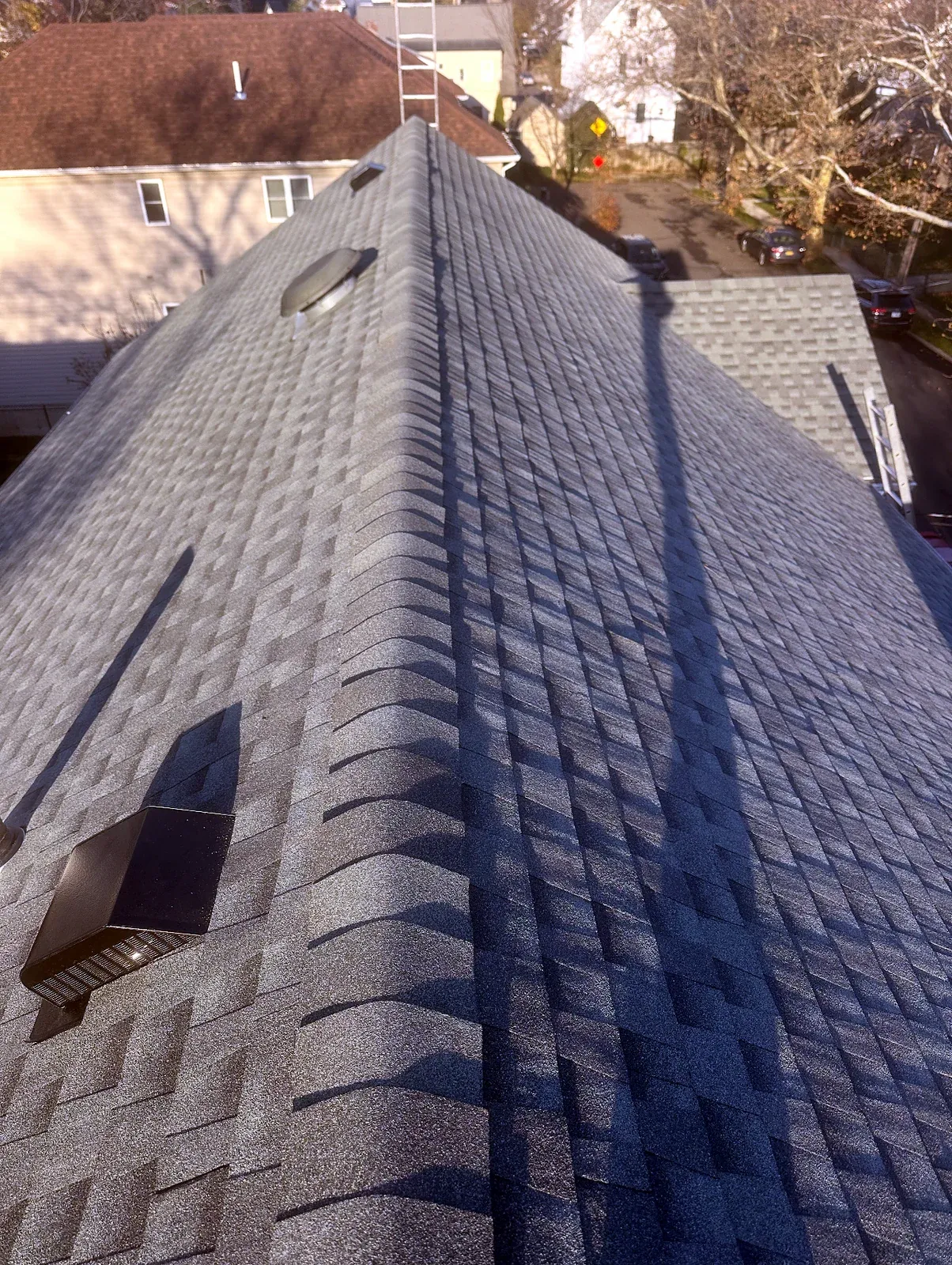
How to make a roof last longer
- Keep the gutters and downspouts clear, especially after the leaves fall.
- Trim branches back so they do not touch or overhang the roof.
- Fix small problems quickly: a lifted shingle or a cracked vent boot is a small repair today and rotted decking next year.
- Make sure the attic breathes: intake vents at the soffits, exhaust at the ridge, and bathroom fans that vent outside, not into the attic.
- Have the roof looked at every few years and after any serious storm.
When it is time to replace it, insist on a tear-off to the deck, new underlayment and flashing, and proper attic ventilation. That is what gives the new roof its full life.
When is it time to replace?
Curling or cracked shingles across the roof, bald patches, granules piling up in the gutters, leaks returning in new places after repairs and soft spots in the deck are the main signs. Our guide to the signs you need a new roof shows each one with a picture, and our repair or replace guide helps you decide. If you are not sure, a free inspection with photos settles it.
Sources and further reading
- InterNACHI, Standard Estimated Life Expectancy Chart for Homes
- US EPA, Using Cool Roofs to Reduce Heat Islands
- National Weather Service New York, Central Park climate data
Prices are our published Staten Island ranges. Everything else comes from our own inspections and installs unless a source is listed.