
A roof is a stack of layers plus a set of edge and seam parts. From the bottom: rafters, decking, ice and water shield, underlayment, shingles, and a ridge vent at the peak. Flashing, valleys, drip edge and gutters move water off. Learn these names and any estimate reads like a plain list.
The layers, top to bottom
Shingles get the credit. Water that gets past them still meets five more defenses. Each layer on a good roof backs up the one above it.
- Shingles. The visible surface. Ours are GAF, and they shed rain, shade the layers below and take the sun and wind.
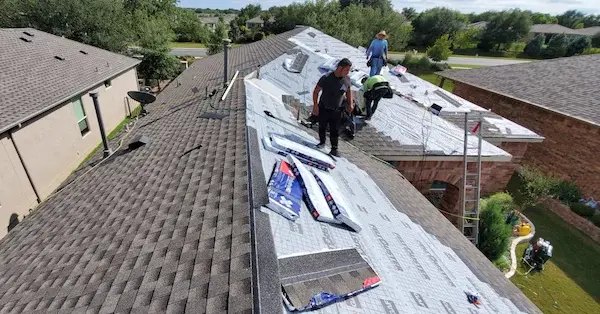
- Underlayment. A water-resistant sheet. If a shingle blows off, this layer holds while you arrange the repair.
- Ice and water shield. A self-sealing membrane along the eaves and in valleys, and around some penetrations. It stops water that backs up under the shingles.
- Decking. The boards or plywood everything nails into. Soft or rotted decking cannot hold a new roof, so it gets replaced.
- Rafters or trusses. The frame that carries the whole roof. You see it from the attic.
- Ridge vent. Warm, damp air leaves through the peak while fresh air enters at the eaves. Moisture that stays trapped rots wood from below.
The roof from the outside
Now look down at the roof as a bird would. This view covers the shapes and edges your estimate names. Tap a number to jump to that part.
What each part does and how it fails
Water follows the same path on every roof: down the slope, through the valleys, off the eave and into the gutter. Trouble starts wherever that path breaks. The red-tagged parts below cause most leaks we see. For the full list of leak causes, read our guide to common roof leak causes.
Ridge
Roof shapeWhat it doesThe top line where two slopes meet. Ridge cap shingles cover the seam, and many roofs carry a ridge vent here.
What goes wrongCap shingles crack and lift in wind. A damaged vent cover lets rain in.
Hips
Roof shapeWhat it doesThe sloped outside corner where two slopes meet and run down to the eave. Hip caps cover the seam.
What goes wrongHip caps loosen first because wind hits the corner. Loose caps leave the seam open.
Valleys
Leak spotWhat it doesThe inside corner where two slopes meet. It collects water from both sides, so it carries more flow than any other line.
What goes wrongFlashing wears through, shingle edges lift and leaves dam the channel. Valleys leak often.
Eaves
EdgeWhat it doesThe low edge that overhangs the wall and sheds water toward the gutter.
What goes wrongIce and clogged gutters push water back under the shingles. Edge decking and fascia rot.
Rakes
EdgeWhat it doesThe sloped edge at a gable end, where the roof stops at the side wall.
What goes wrongWind lifts edge shingles. Without drip edge, water reaches the decking edge.
Flashing
Leak spotWhat it doesThin metal that seals where the roof meets a wall, chimney, skylight or another slope. Step flashing steps up a wall in small pieces.
What goes wrongMetal rusts or bends, and sealant dries out and cracks. A frequent source of leaks that seem to come from nowhere.
Vent boots
Leak spotWhat it doesThe collar that seals around a plumbing vent pipe where it exits the roof.
What goes wrongThe rubber ring cracks in the sun, often before the shingles around it wear out.
Chimney
Roof shapeWhat it doesA masonry or metal stack. Wide ones often get a small peaked saddle behind them so water splits around.
What goes wrongMortar crumbles, the crown cracks and flashing pulls away. Some of this is mason work, not roofing.
Gutters
Water pathWhat it doesChannels along the eave that collect runoff. Downspouts carry it away from your foundation.
What goes wrongClogs, sags and loose hangers send water down the wall and into fascia and soffit.
Drip edge
EdgeWhat it doesAn L-shaped metal strip along eaves and rakes. It guides water off the edge and into the gutter, away from the wood.
What goes wrongOlder roofs often lack it. Bent or rusted strips let water wick behind the edge.
Not sure which part is failing? We inspect, photograph each trouble spot and write it up in plain words.
See our inspectionsWords that show up on your estimate
Estimates mix trade terms with line items. Here is what the common ones mean, so you can ask good questions and compare quotes side by side.
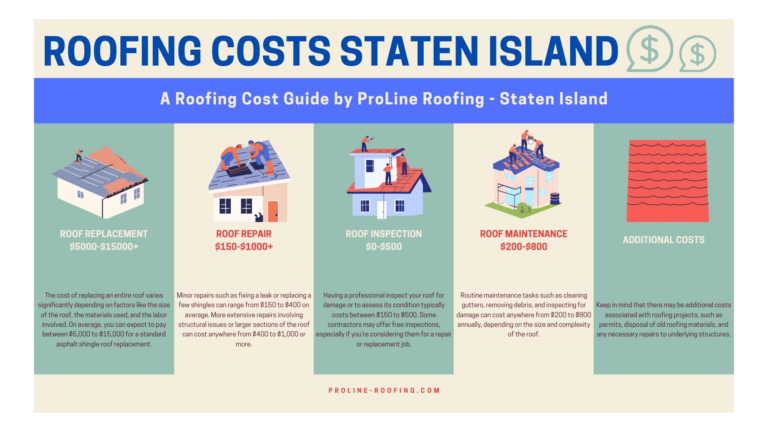
A clear estimate lists each of these with a material and a scope. If a line just says “roofing,” ask what it covers. Want numbers? Our roofing costs guide shows typical prices: about $5,000 to $15,000+ for a full asphalt shingle roof. Planning the whole job? Start with the replacement walkthrough or our residential roof replacement page. A single failed part may need only a leak repair, which often runs $150 to $400 for a minor fix.
Questions we hear
What are the main parts of a roof?
Framing (rafters or trusses), decking, underlayment, shingles, flashing, vents and gutters. Edge parts include the eaves, rakes, ridge, hips and valleys. Each has a different job, and each fails in its own way.
What is the difference between underlayment and ice and water shield?
Underlayment covers the whole deck as a backup water barrier. Ice and water shield is a thicker, sticky membrane that seals around nails. It goes in the spots where water pools or backs up, such as eaves and valleys.
Why does roof flashing leak?
Flashing sits at the joints, where roofs are weakest. Metal rusts, bends or pulls loose, and sealant cracks with sun and temperature swings. The leak often shows up far from the real entry point, so a pro should trace it.
Does every roof need a ridge vent?
Every attic needs airflow, and a ridge vent is one common way to get it. The right setup depends on your roof shape and attic. We check intake and exhaust together and tell you what yours needs.
What should a roof estimate include?
Tear-off, decking allowance, underlayment, ice and water shield, shingles, flashing, drip edge, vents, ridge cap, permit, disposal and cleanup. We give you a written estimate with a photo report. See also our free estimate page.
Can I check my roof parts myself?
From the ground, yes. Use binoculars to scan the ridge, valleys, flashing and gutters. Inside, use a flashlight in the attic. Skip the ladder. Aging shingles are slick and they break when you walk on them.
Want a pro to read your roof?
We inspect every part on this page, show you photos and give a written estimate. Open 24/7 for leaks. We serve Staten Island, Brooklyn and New Jersey.