
Roofs leak at seven common spots: flashing around chimneys and walls, vent pipe boots, valleys, damaged or missing shingles, clogged gutters and ice dams, skylights, and an attic that traps moisture. The stain on your ceiling sits away from the leak, so trace the water uphill.
Water coming in right now? Do these four things
- 1Catch itSet a bucket or pot under the drip. Lay a towel inside so it does not splash. Move furniture and electronics out of the way.
- 2Photograph itTake photos and a short video of the stain, the drip and any damage. Date them. They help your repair and any insurance claim.
- 3Stay safeStay off the roof. If the ceiling bulges, keep people out of that room. If water touches a light fixture or outlet, turn off power to that circuit.
- 4Call a rooferCall (347) 323-9128. We are open 24/7 for leaks, we respond fast and we stop the water first. Read the roof emergency guide for more.
Seven places water gets into a roof
Tap a number on the cutaway to jump to that cause. Most leaks start at a spot where the roof surface changes: something pokes through it, two slopes meet or a seam ages.
The seven causes, with what to look for
1Flashing at chimneys and walls
Look for: Rust, gaps, lifted metal or dried, cracked sealant where the roof meets a chimney, dormer wall or siding.
Why it leaks: Metal flashing and sealant carry the water over each joint. When they pull away, rain runs behind them.
Leak repair service →2Vent pipe boots
Look for: A cracked or split rubber collar around a plumbing vent, or exposed nails at its base.
Why it leaks: The rubber ages in sun and cold. A hairline split lets water run straight down the pipe into the house.
Roof repair services →3Valleys
Look for: Worn spots, granules piled at the bottom, or debris and leaves stuck in the V where two slopes meet.
Why it leaks: A valley carries water from two roof planes. It works hardest, so it fails earlier than flat shingle areas.
Leak repair service →4Damaged or missing shingles
Look for: Bare patches, curled or cracked shingles, and granules in the gutters, often after a windy storm.
Why it leaks: A missing shingle exposes the layer under it, which is not built to face weather for long.
Storm damage repair →5Clogged gutters and ice dams
Look for: Overflow lines on siding, sagging gutters, icicles along the eave, and leaks that show up after snow melts.
Why it leaks: Blocked gutters push water up under the roof edge. In winter, ice forms a dam and melt water backs up under shingles.
Gutter repair →6Skylights
Look for: Stains on the ceiling or wall near the skylight, fogging between the panes, or a cracked seal around the frame.
Why it leaks: Skylights have long seams on every side, and the seals age. Condensation can also mimic a leak.
Skylight repair →7Attic condensation and poor ventilation
Look for: Damp insulation, frost on nails in winter, a musty smell, and dark patches on the roof boards with no dripping.
Why it leaks: Warm indoor air meets the cold roof deck and turns to water. It looks like a leak, but the roof is not open.
Roof inspections →Why the stain is not under the leak
Water follows gravity, but it also follows surfaces. It enters through the roof, hits the underlayment or deck, and runs along the underside of the boards, a rafter or a pipe until something stops it. Then it drops. That spot can sit several feet from the opening, or in a different room.
So when you find a stain, look uphill. Check the attic above it, follow any wet wood toward the ridge and look for chimneys, vents or valleys along that line.
What your stain tells you
Cannot tell which row you are in? Send us your photos or book a visit. We find the entry point, show you photos and put the repair in writing.
Book my inspectionRepair or replace once you find it
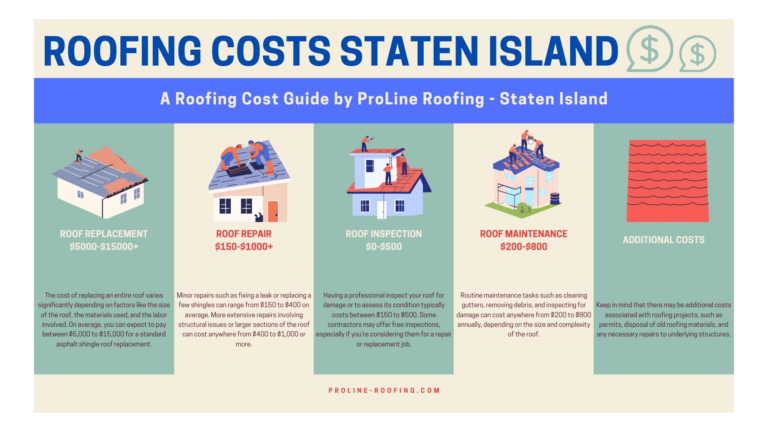
A single failed boot, flashing or a few shingles can mean a repair. Typical minor repairs run $150 to $400 and larger ones $400 to $1,000+. Leaks that come from many spots on an aging roof point to replacement, which for asphalt shingles runs about $5,000 to $15,000+. See the real cost of roof repairs in Staten Island and the DIY roof repairs guide before you reach for sealant. Patching only the stain can hide a leak that keeps rotting wood.
Questions we hear
Why is my roof leaking when it is not raining?
Melting snow or ice, condensation in the attic, or water still draining along framing from earlier rain can all drip after the weather clears. A leaking pipe or air conditioner line can also cause stains.
Why does my ceiling leak only in heavy rain?
Heavy, wind-driven rain finds small openings that light rain misses, such as a split vent boot or loose flashing. Note which storms cause the drip and tell your roofer.
Can a roof leak without a visible stain?
Yes. Water can soak insulation and wood in the attic for weeks before a ceiling stain appears. A musty smell or dark roof boards in the attic are early signs.
Is a brown ceiling stain always an active leak?
No, but treat it as a warning. A dry brown ring means water got in at some point. Photograph it, check it after the next rain and have the source found.
Will homeowners insurance cover a roof leak?
It depends on your policy. Sudden storm damage may be covered, while leaks from age and wear often are not. We provide photos and a written report to support a claim, and your insurer decides.
Can I fix a roof leak myself?
Sealant seldom lasts and the roof is dangerous to work on. Catch the water, document it and call a roofer. Our leak repair team locates the true source.
Leak somewhere you cannot trace? We will.
Call any hour. We stop the water first, then find the source and show you what we found.